
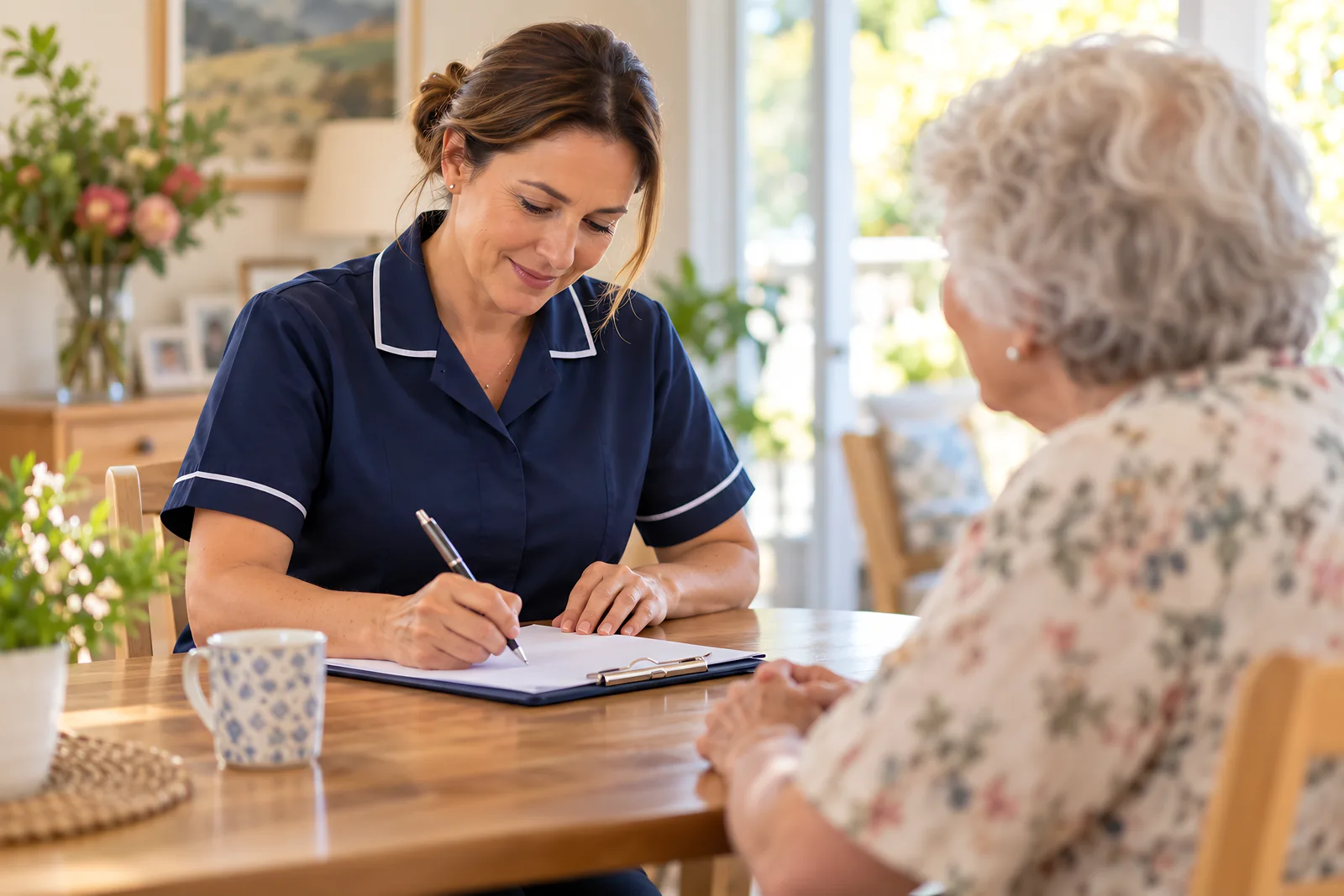
Community nursing can support people with clinical care needs who can receive appropriate nursing care in their own home. Depending on the person's circumstances, this may include assessment and monitoring of clinical conditions, medication administration, wound care, clinical continence management, skin-integrity management, education and connection with other specialist services. These activities are also recognised within the Support at Home nursing-care service category. My Aged Care
A clear referral helps the nursing team understand the person's needs, identify clinical priorities and determine whether the requested service can be provided safely in the community.
When might community nursing be appropriate?
Consider community nursing when a person requires ongoing or short-term clinical support at home, including:
wound assessment, management or monitoring
medication management or administration
diabetes-related nursing support
continence or catheter care
skin assessment and pressure-injury prevention or management
health assessment and clinical monitoring
PEG or enteral-feeding support where appropriate
post-hospital nursing care
support with chronic or complex health conditions
nursing education for the person or their carers
clinical review when health needs are changing.
The appropriate service and clinician will depend on the person's clinical needs, risks, funding arrangements and the scope of the requested care.
What information should I include?
Where relevant and available, provide:
Patient information: name, date of birth, address, telephone number, preferred contact and details of a family member, carer or representative.
Reason for referral: clearly describe what you are asking the community nursing service to assess or provide.
Clinical information: relevant diagnoses, medical history, recent deterioration or hospitalisation, allergies, infection risks, mobility or falls concerns, cognitive issues and other factors that may affect care at home.
Medication information: provide a current medication list and any appropriate medication orders or authorities where medication administration is requested.
Treatment-specific information: for example, wound history and current management plan, catheter information, diabetes-management requirements, PEG/enteral-feeding plan or other relevant clinical instructions.
Current healthcare team: GP, specialist, allied-health professionals, pharmacy and other services involved.
Supporting documentation: discharge summary, medication documentation, wound plan, relevant pathology or specialist instructions, care/support plan and other clinical documents that will help establish safe care.
Tell us when timing matters
Please clearly identify whether the referral is routine, time-sensitive or associated with a planned hospital discharge.
If there is an immediate or life-threatening medical emergency, community nursing referral pathways should not replace emergency medical care. Call 000 if you need emergency assistance.
What happens after a referral?
SA Community Support reviews the referral and the information supplied. We may contact the referrer, person, or authorised representative if we need additional information.
If the referral is appropriate and we can establish service arrangements, next steps may include a nursing assessment, developing or reviewing the care plan, and coordinating with relevant treating professionals.
A referral does not automatically confirm acceptance, funding eligibility, or service commencement.
Make a referral
Email: connect@sacommunitysupport.com.au
Office: 08 6388 0982 Dial # 2
Clinical Care Manager: 0494 722 663
Service area: Metropolitan Adelaide, Adelaide Hills, Barossa and Clare Valley.