
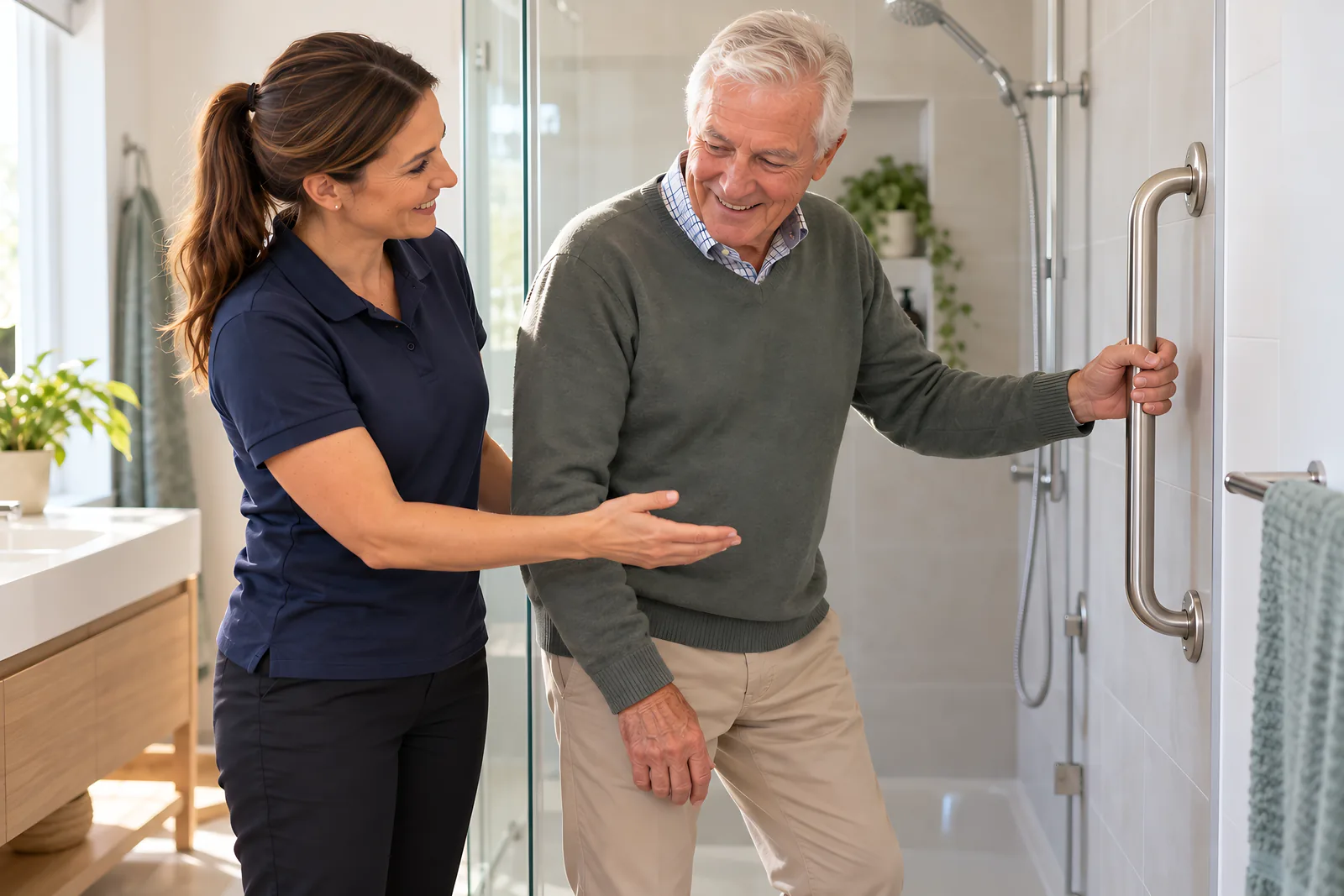
Allied-health professionals often see aspects of a person's day-to-day function that may not be apparent during a short medical appointment.
A physiotherapist may identify increasing falls risk. An occupational therapist may recognise that personal care is becoming unsafe. A dietitian may identify nutritional concerns. A speech pathologist may identify support requirements around communication or swallowing.
Community nursing and appropriate in-home supports can complement—not replace—allied-health care by helping translate recommendations into the person's everyday home environment.
When another layer of support may help
Consider discussing additional home support when you identify concerns such as:
difficulty managing personal care
reduced ability to complete everyday activities
medication-management difficulties
skin-integrity or wound concerns
falls or mobility risks
continence or catheter needs
difficulty maintaining adequate nutrition or hydration
carer strain
deterioration following hospitalisation
difficulty following a treatment or rehabilitation plan without additional assistance
clinical needs requiring nursing assessment or monitoring.
Community nursing and allied health
Support at Home recognises both clinical nursing and allied-health services within its Clinical Supports category. The program also includes a Restorative Care Pathway that can provide time-limited intensive allied-health and nursing services for eligible participants, with the goal of restoring function, maintaining independence, regaining skills, and reducing further age-related decline. Dept of Health, Disability & Ageing
This creates opportunities for coordinated care where the person's nursing, functional and everyday-support needs overlap.
What helps when making a referral?
Please tell us:
What you have identified. Describe the concern in practical terms.
What you recommend. Include relevant treatment recommendations, precautions, strategies or equipment requirements.
What outcome you are working towards. For example, safer showering, improved mobility, pressure-injury prevention, greater independence or maintaining the person's ability to remain at home.
What support is needed. Identify whether you are seeking nursing, personal care, home support or simply asking us to discuss the situation.
Who else is involved. Include the GP, family/carer and other relevant professionals where appropriate.
We value shared care
Where appropriate and authorised, communication between community nursing, support staff, allied health, GPs and other treating professionals can help maintain continuity and identify changes in the person's needs.
Refer or discuss a client
Office: 08 6388 0982 Dial # 2
Clinical Care Manager: 0494 722 663
Email: connect@sacommunitysupport.com.au