
GPs
Refer patients who may benefit from community nursing, post-hospital support, personal care or additional assistance at home.
GP referralsFor Referrers
SA Community Support works with GPs, hospitals, discharge planners, allied-health professionals, care coordinators and other health professionals to support people at home.
We provide Support at Home services and community nursing across Metropolitan Adelaide, Adelaide Hills, Barossa and Clare Valley.
Our focus is simple:
Understand the person's needs. Provide appropriate support. Communicate with the people involved in their care.

Choose your pathway
Refer patients who may benefit from community nursing, post-hospital support, personal care or additional assistance at home.
GP referralsRefer people who require appropriate support or nursing care after returning home.
Hospital & discharge referralsRefer clients who may require additional nursing, personal care, community access or practical support alongside their existing allied-health services.
Allied-health referralsDiscuss clients who require additional support to remain safe, independent and connected at home.
Care coordinator referralsIf you are involved in someone's care and believe community-based support may help, contact our team to discuss the appropriate pathway.
Talk to our teamWhat can we help with?
A referral may be appropriate when a person:
Every referral is considered according to the person's individual circumstances, clinical needs, approved arrangements and available services.
The process
Our team receives and reviews the referral information provided.
Where necessary, we contact the appropriate person to clarify the referral, current services, needs and next steps.
We identify the appropriate service pathway based on the person's circumstances, approved arrangements and service requirements.
Where nursing assessment or other assessment is required, the appropriate professional completes the relevant assessment and contributes to care planning.
Once the appropriate arrangements are confirmed, agreed services can commence.
Where appropriate and authorised, we communicate with relevant members of the person's healthcare team and respond to changes in needs.
Referral information
The more useful information we receive at referral, the easier it is to understand the person's needs.
Where available, please provide:
Where appropriate and authorised, relevant clinical or care documentation can be provided with the referral.
We aim to communicate clearly and respectfully with the people involved in the person's care.
Our team is locally based and focused on practical, timely service.
Community nursing services are supported by experienced nursing leadership.
We respect the person's dignity, privacy, choices, independence and goals.
Changes or concerns identified during care are managed according to the person's needs, clinical responsibilities and applicable procedures.
We believe effective care depends on strong relationships between clients, families, carers and healthcare professionals.
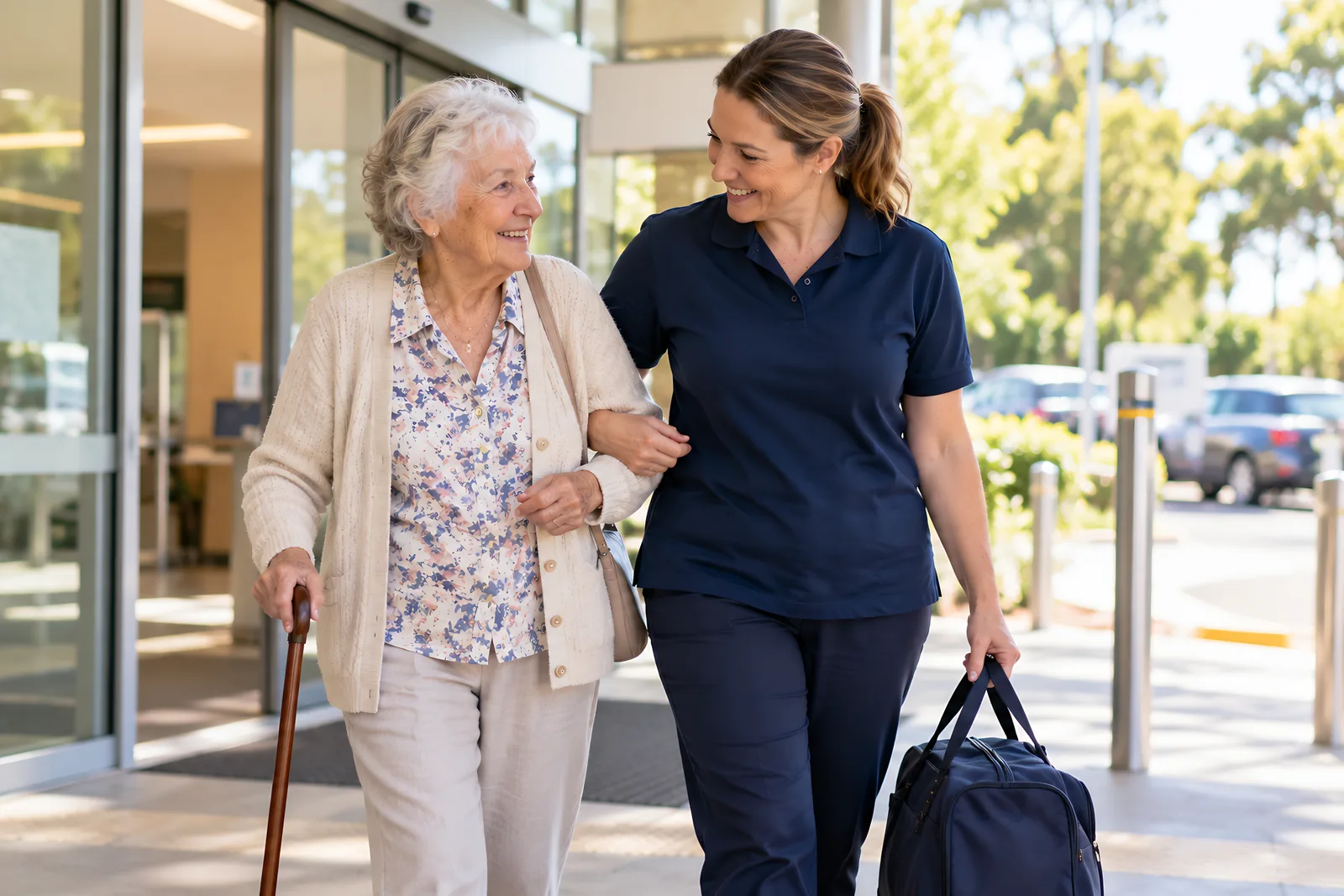
A successful discharge does not end when the person leaves hospital.
People may return home with:
Our team can discuss the appropriate community support pathway.
GP referrals
SA Community Support works alongside GPs to provide appropriate Support at Home and community nursing services for people living in the community.
We can support patients who require:
Where appropriate and authorised, we can communicate relevant information with the patient's healthcare team.
Referral reason, relevant diagnoses, current medications, recent hospitalisation, clinical concerns, current services and any relevant care documentation.
Hospital & discharge referrals
Returning home after hospital can create new clinical and practical challenges.
SA Community Support can discuss appropriate community nursing and Support at Home pathways for people who require additional support following discharge.
We may assist with:
Where available, please provide the discharge summary, medication information, relevant clinical documentation, current support arrangements and the person's immediate support needs.
Allied-health referrals
SA Community Support works alongside allied-health professionals to help clients receive appropriate support in their home and community.
Our services may complement recommendations from:
Depending on the person's needs and approved arrangements, support may include nursing, personal care, daily living assistance, community participation, transport and other appropriate services.
We value clear communication, respect professional roles and recognise that good outcomes often depend on coordinated care.
You can make a referral online or contact our team directly.